
“A reflective journey through nostalgia, migration, and the fragments of home.”
Cover Image: Tobi Bakre, Tomi Ojo, and Montunrayo Abiola-Oloke in the short film, leaving Ikorodu in 1999.
There are films that announce themselves long before you see them: trailers, posters, cast lists, festival chatter. Leaving Ikorodu in 1999 was not one of them. Until it flickered onto the screen at the 10th-anniversary screening of ART X Lagos, in 2025, a year after its 2024 premiere, I knew nothing about it. I hadn’t seen a synopsis or any details about the story. So when the first face that appeared, Tobi Bakre, it felt familiar, as did Tomi Ojo. But when Sheila Atim appeared, I was genuinely shocked. I hadn’t expected her at all. Seeing her share the screen with Bakre and Ojo in a film so quiet and nostalgic felt like watching something rare, a small, unannounced gift that found its way to me by surprise.
It unfolds in 1999 and takes place in a Nigeria that has just emerged from years of military rule, a country still cautiously stepping into democracy. But rather than face that reality, leaving Ikorodu in 1999, steps inward. The film takes the quiet route, telling the story of Momo, a young girl preparing to leave for London, and her aunt and uncle, Fade and Mahmoud, who drive her from Ikorodu to the airport. Along the way, it meditates on departure, family, and the spaces between words and silences.
The first thing that impresses is the cinematography: every frame is a memory preserved in amber. Dusty roads, faded shop signs, and the muted greens and browns of suburban Lagos give the film an intimate texture. A vintage Mercedes carries the characters through soft morning haze, almost as if the car itself is part of the memory. Without narrating 1999, the film evokes hope, uncertainty, and the fragile optimism of a nation in transition.
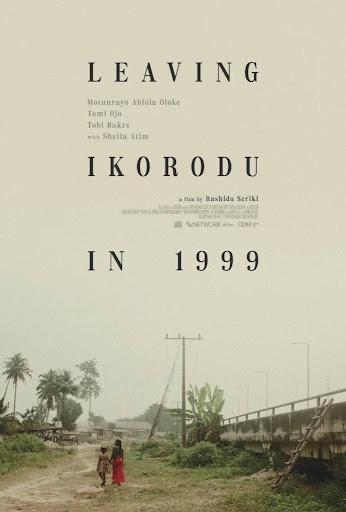
Leaving Ikorodu in 1999 film poster
One of the most iconic moments comes when Momo is gifted a jersey with her nickname printed on the back and eagerly tries it on. She clearly loves the jersey, and her delight is infectious. Later, she bangs on the glass of the Mercedes to get her aunt and uncle’s attention, a playful gesture that also carries the warmth and gratitude of a child thrilled by such a thoughtful gift. It is a short scene, but one that holds the emotional weight of the whole film: love, longing, and the confusion of growing up between places.
And yet, for all of its visual splendour, the film fails to quite live up to its title. “Ikorodu” and “1999” are names steeped in historical and cultural significance; the story rarely, if ever, extends beyond its local context. The political, social, and cultural textures of 1999 Lagos are absent, with Ikorodu little more than a vague backdrop rather than a concrete, breathing place. Confined to the car and the small emotional orbit of the characters, the narrative relies heavily on mood rather than story.
The performances, too, are affected by this emphasis on aesthetics over narrative. Tobi Bakre, a generally high-octane presence on screen, often feels contained and hesitant. Tomi Ojo brings tenderness, but even she feels constrained within the film’s quiet rhythm. Shelia Atim really surprised me; she also fit seamlessly into the ensemble, but the brevity in the story limits how much any of the actors can get into their characters. The silences, while poetic, at times ring hollow, leaving viewers yearning for more depth and connection.

Tomi Ojo and Montunrayo Abiola-Oloke

Tomi Ojo and Tobi Bakre
The screening itself added another layer to the experience. The program listed the film as 122 minutes, although it actually ran for about 18 minutes, making it a short. The mismatch caused some murmurs in the room and even a mild stir from someone associated with the film. While the film itself is intact, the expectation of a feature-length story heightened the sense of incompleteness. The short is a glimpse of a much larger film, a seed of an idea waiting to grow.
And yet, despite its narrative limitations, the film lingers. It captures the quiet ache of leaving, the ambivalence of nostalgia, and the tender tension of family bonds. It reminds us that departure is as much an internal journey as an external one, and that memory often matters more than narrative. Rashida Seriki’s direction demonstrates an eye for texture, rhythm, and atmosphere, a filmmaker attuned to the poetry of the everyday. This won’t answer all of the questions it raises about Nigeria in 1999, migration, and belonging, but Leaving Ikorodu does something that most films can’t-it builds a feeling.
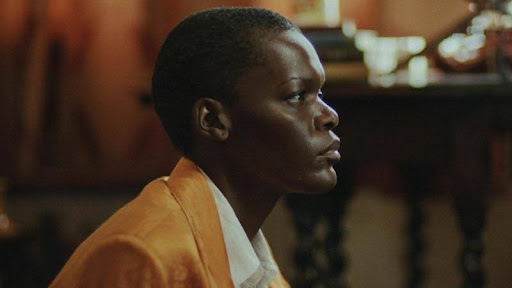
Sheila Atim
It’s a short, evocative meditation on memory, love, and the unspoken tensions of leaving home. Its strength is in its fragments: brief, beautiful moments that stay with you long after the lights come on. It’s a film of glimpses and impressions, a film of nostalgia and gentle regret. It makes you wish for more, not because it fails, but because it almost succeeds. I kept asking myself while watching the movie: What was Nigeria in 1999? What dreams were beginning? What memories were being made? The film doesn’t answer those questions. It lets you feel them instead.