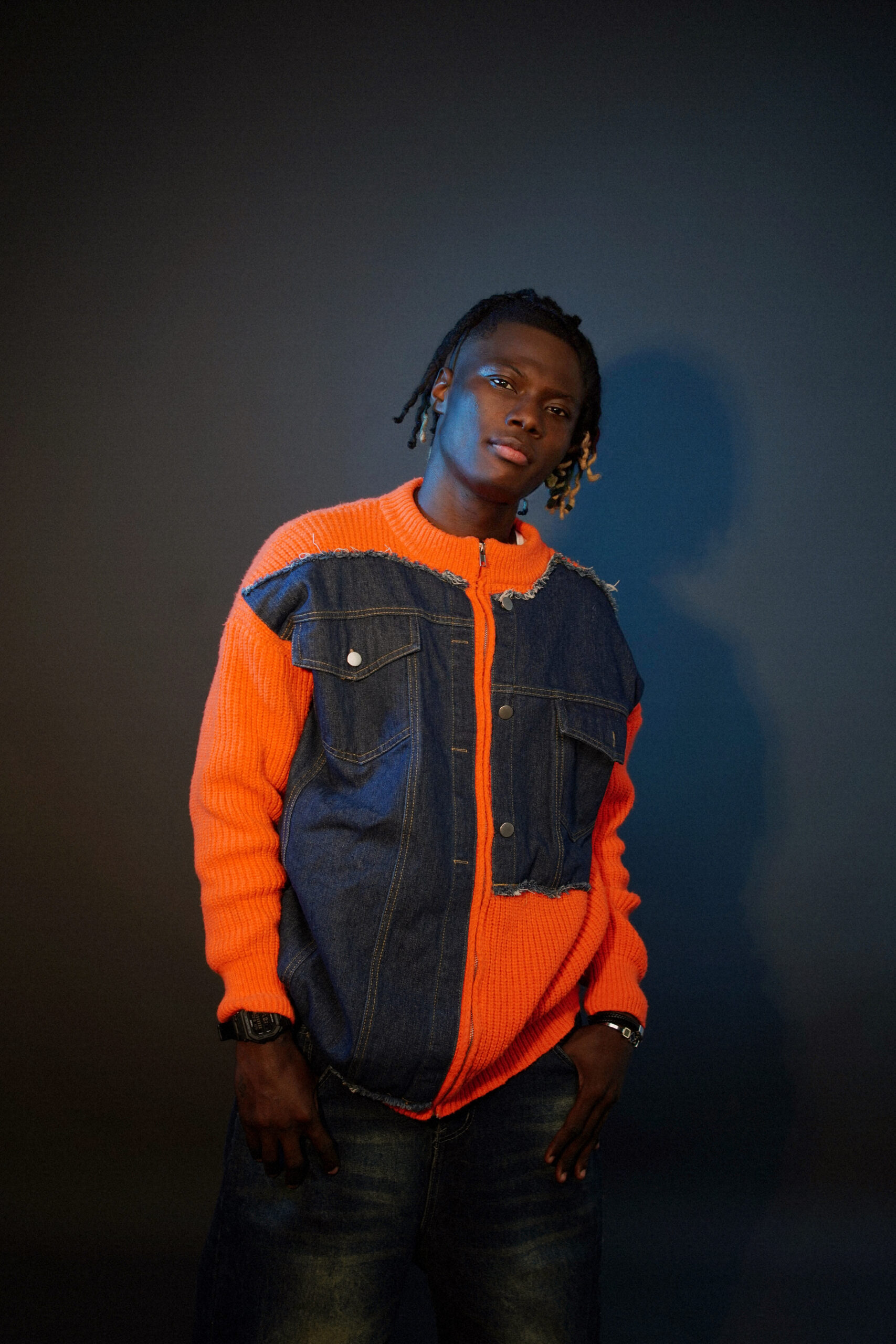
At a time when most artists are fighting to stand out in an increasingly crowded industry, M’Kido has chosen an unusual route. By weaving French, Yoruba, English, Lingala, Bambara and other African languages into his music, the singer has carved out a sound that feels both distinctly Nigerian and unmistakably pan-African. What began as a fascination with language has evolved into a growing catalogue and audience that stretches across multiple countries. We caught up with M’Kido to discuss the origins of his sound, the success of records like Yemasa, and why he believes music should have no borders.
NoteS: How did your journey into music begin?
M’Kido: My music started with a vision. I realised that very few Nigerian artists were fully embracing French and other African languages in their music. You had artists like Yemi Alade, Jay Martins and a few others incorporating bits of French, but I felt there was room to go deeper.
I became fascinated by French language and culture and decided to build something around that. A lot of people told me it wouldn’t work. They said, “You’re in Nigeria. Nigerians won’t listen to French music.” But I believed in the vision. Over time, I found a way to blend French with Yoruba, English and other African languages. That became the foundation of my sound.
NoteS: Where did your love for languages come from?
M’Kido: My grandmother spoke several languages, so I was exposed to that from a young age. I also had relatives who came from Côte d’Ivoire during holidays, and I learned from them.
Growing up, I watched French-language programmes on television every day. I’d write down words and phrases, study them, and learn how they were used. There was also a music programme that introduced me to songs from different African countries. That helped shape my understanding of language and music together.
NoteS: Did you always believe Nigerians would connect with music that incorporated French?
M’Kido: Yes, because Nigerians are everywhere. We have Nigerians living across Francophone Africa, Europe, and other parts of the world. At the same time, many French-speaking Africans already listen to Afrobeats. They listen to Davido, Wizkid, Burna Boy and many others.
So I asked myself a simple question: if Francophone listeners can embrace Nigerian music, why can’t Nigerians embrace a Nigerian artist who incorporates French into his sound?
NoteS: What was the first song that really changed things for you?
M’Kido: The turning point was Like You. I recorded different versions of the song, including one that blended Yoruba, English and French. The French version connected strongly with Francophone audiences, and that’s when I realised I was onto something.
It showed me that the audience I imagined actually existed.
NoteS: How has the journey been since then?
M’Kido: It’s been encouraging. Recently, I released a song that crossed one million YouTube views within days. Seeing that kind of response reminds me why I stayed committed to this path when people doubted it.
NoteS: What does “Yemasa” mean to you today?
M’Kido: Yemasa changed my life. Before releasing it, I remember praying and asking God for direction. I told myself that if the song didn’t connect, maybe music wasn’t my path.
Thankfully, it worked. It gave me confidence and opened doors financially and professionally. It remains one of the most important records of my career.
NoteS: Your music blends several languages. How do you maintain that balance?
M’Kido: I always focus on melody first. Music is universal. If the melody is strong and the emotion is real, people connect with it regardless of language.
That’s why I can combine Yoruba, English, French, Bambara, Lingala and other languages while still making the songs accessible.
NoteS: Your latest single, “Parce Que Je T’aime,” features multiple languages. What inspired it?
M’Kido: The title means “Because I Love You.” It’s a love song, but it’s also a celebration of African diversity. The record features Yoruba, English, French, Bambara, Lingala and other languages.
I wanted listeners from different parts of Africa to hear a piece of themselves in the song.
NoteS: Does being multilingual give you an advantage as an artist?
M’Kido: Absolutely. It allows me to connect with audiences across different countries and cultures.
When I check my social media, I see comments from Congo, Côte d’Ivoire, Burkina Faso, Mali and many other places. That’s powerful because it shows the music is travelling beyond borders.
NoteS: You’ve collaborated with established artists. What makes a good collaboration?
M’Kido: Energy and mutual respect. I’ve worked with artists like Reminisce and Terry Apala, and for me, collaboration is about creating something meaningful together.
It’s also one of the best ways for artists to grow because both sides are exposed to new audiences.
NoteS: What are your thoughts on artists becoming repetitive or playing it safe?
M’Kido: Artists need to keep evolving. That’s why having a strong team matters. A good team helps you see opportunities, understand the business side of music and continue growing creatively.
If you’re an independent artist, having the right people around you can make a huge difference.
NoteS: What’s next for M’Kido?
M’Kido: We’re planning concerts across West Africa and also looking at opportunities in France. I’m also working on a new project that continues exploring my French-influenced sound.
The goal is simple: keep building bridges through music and keep showing that African music can exist in many languages while still connecting people.
NoteS: Finally, how would you describe your mission as an artist?
M’Kido: I want to create music without borders. Music should connect people, cultures and languages. That’s what I’ve been working towards from the beginning, and that’s still the vision today.