
Two weeks ago, Olaolu Slawn posted, “NO RIMOWA NO PROBLEM, WENT AND MADE MY OWN SUITCASE,” teasing what has become his signature self-appointed collaboration with brands, this time with the German luggage company Rimowa. This is a familiar pattern in how Slawn operates.
View this post on Instagram
In June 2024, Slawn released a limited run of ten customised Rolex Datejust watches through his website, each dial hand-painted in his art style. They sold out in four minutes. The buyers included Dave, Stormzy, and Lil Yachty, and the secondary market responded accordingly. Rolex, for its part, had no prior knowledge of the project. According to what Slawn has said publicly, the brand reached out to him after the watches started circulating. They had a conversation, and both parties left it there. There was no takedown or legal action. The watches exist, people bought them, and that was that.
But this is not a new act of subversion. Creatives have long operated in the space between homage and appropriation, between fan intervention and commercial provocation. In fashion, Dapper Dan ran a boutique in Harlem through the 1980s where he took Louis Vuitton, Gucci, and Fendi logos and screen-printed them onto his own custom designs, creating pieces the brands themselves would never have made. Gucci sued him and shut the shop down in 1992. Then in 2017, Gucci sent Alessandro Michele’s resort collection down the runway, and one of the pieces bore a striking resemblance to one of Dapper Dan’s earlier works. The backlash was swift enough that Gucci didn’t just apologise, they partnered with him, opening a Dapper Dan atelier in Harlem and formally bringing him into the fold. The brand that had litigated him out of business came back, decades later, to legitimise what he had been doing all along.
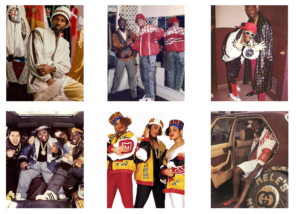
Images of Dapper Dan’s early work
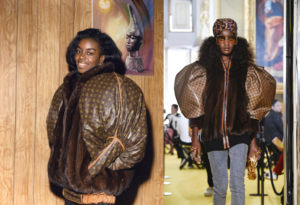
Dapper Dan’s Original Design (Left), Gucci 2017 Resort Collection (Right)
In art, Brian Donnelly, aka KAWS, who said “I have nothing to do with this. This is misleading,” to the slawn and KAWS “Collab,” built the foundation of his practice on the same logic. Before the museum retrospectives and the auction records, he was breaking into phone booth advertisements across New York and Tokyo in the late 1990s, inserting his signature double X into existing brand imagery without permission.
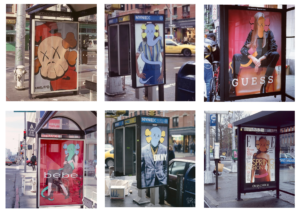
Images of Brian Donnelly’s early work
What Slawn is doing sits in a lineage that runs directly through both of them. The method is old.
He had done the same with Louis Vuitton bags before the Rolex watches, buying pieces directly from the brand’s stores, painting over them, and selling them as a “LV X SLAWN” product.
View this post on Instagram
What makes Slawn’s practice notable is the consistency of it. This is clearly a considered way of working, one that he has returned to across multiple brands, and one that seems to generate a particular kind of cultural conversation each time it happens.
What adds another dimension is that Slawn’s official resume is formidable. By 2025, it already included the Brit Awards statuette redesign, making him the youngest person and the first Nigerian-born artist to hold that commission. He had redesigned the FA Cup trophy, placed his artwork on an F1 car racing at Silverstone, and worked formally with Nike. But as he said on his Instagram stories after the KAWS situation: “As you guys have seen thru Nike, FA, the F1, Brits etc I can do official collabs if I want, but what’s the fuckin fun in that?” The unofficial projects are a deliberate choice, and that choice is a significant part of what makes Slawn one of the most compelling and difficult-to-categorise artists working right now.
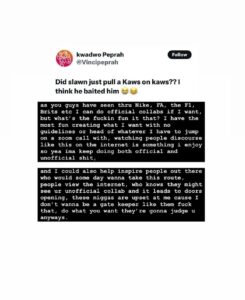
Whether you debate the ethics of it or the merit of his work itself is a separate conversation. What is harder to argue with is that Slawn is operating in a tradition that has defined a lot of the greats, and by every available measure, he is firmly on that path.