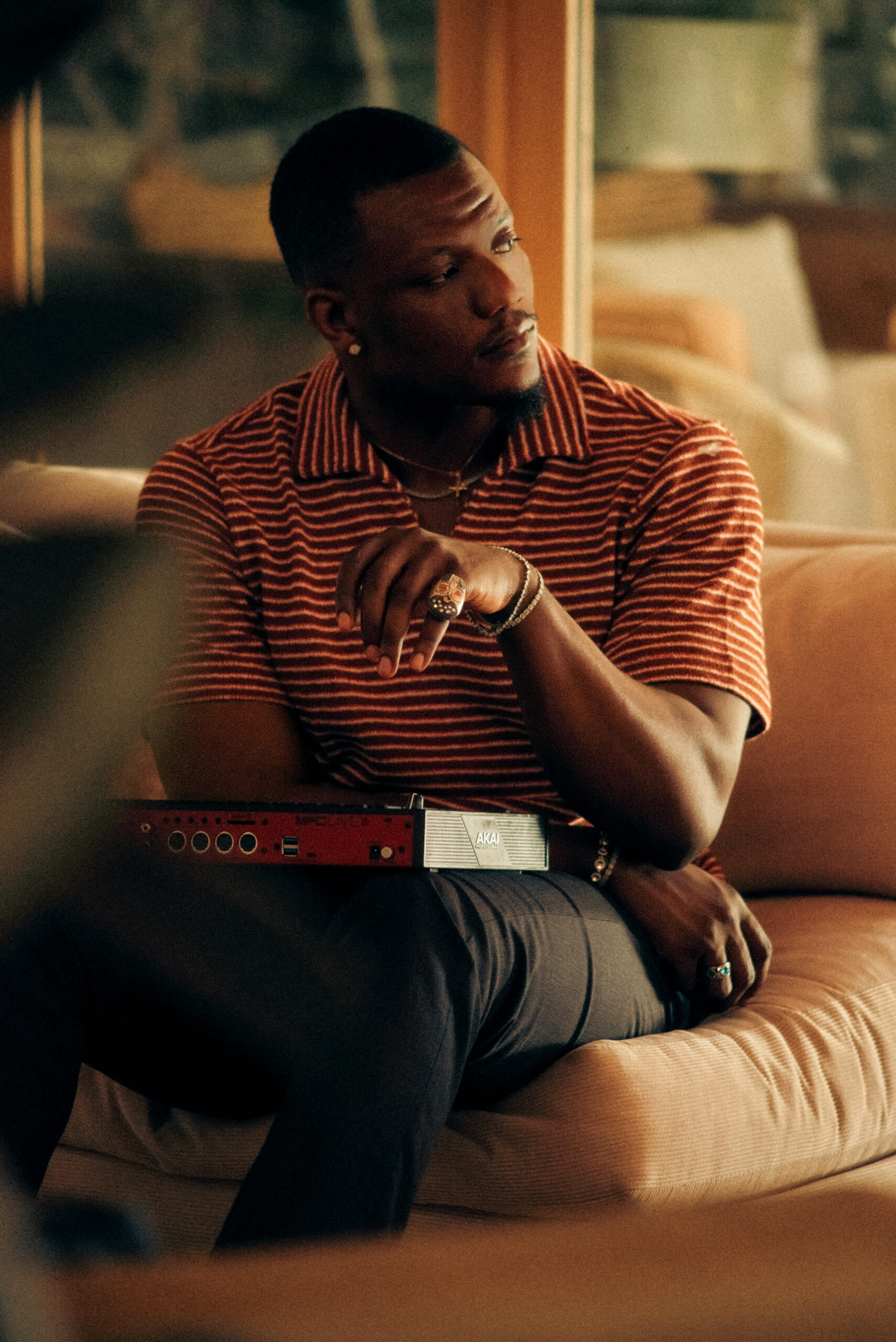
The producer who made everyone else’s anthems finally makes his most personal statement
PHEELZ on A RII SET: “I had to step back not from the world, but from myself.”
There is a version of this story that writes itself easily. Nigerian producer makes it out of Ojo, Lagos. Learns the ropes under ID Cabasa at Coded Tunes. Produces two of Olamide’s early albums practically by himself. Becomes the most sought-after beatmaker in the country before he’s twenty-five. Then goes viral on TikTok years later, signs to Warner UK, lands on the Billboard Global 200, and starts making music with Dr Dre and Usher. Clean arc.
But Pheelz, born Phillip Kayode Moses, head of the Rii Collective, shy kid from Ojo who used to draw masked figures to express the things he couldn’t say out loud, doesn’t really live in the clean version of things.
“I had to step away from the noise into silence”. “There’s a level of silence that’s non-negotiable. The momentum is difficult to sustain without a pause.” – Pheelz
The truth is more interesting. At the height of the wave, somewhere between the global streaming numbers and the co-signs and the record deal, something cracked. Not publicly or loudly. Pheelz didn’t make it known. He just went quiet. Stepped back from the online noise, slowed output, and sat with the hollow that the music industry rarely gives its stars permission to feel.
What he was navigating was depression. And he’s ready to talk about it now, not because it’s over, but because he made something out of it. That something is A Rii Set, an eight-track EP that arrives as the most vulnerable and considered work of his career. The lead single, “I’M OK” featuring Tiwa Savage, is a mid-tempo Afro-soul meditation that sounds less like a declaration and more like something someone says until they manifest it.
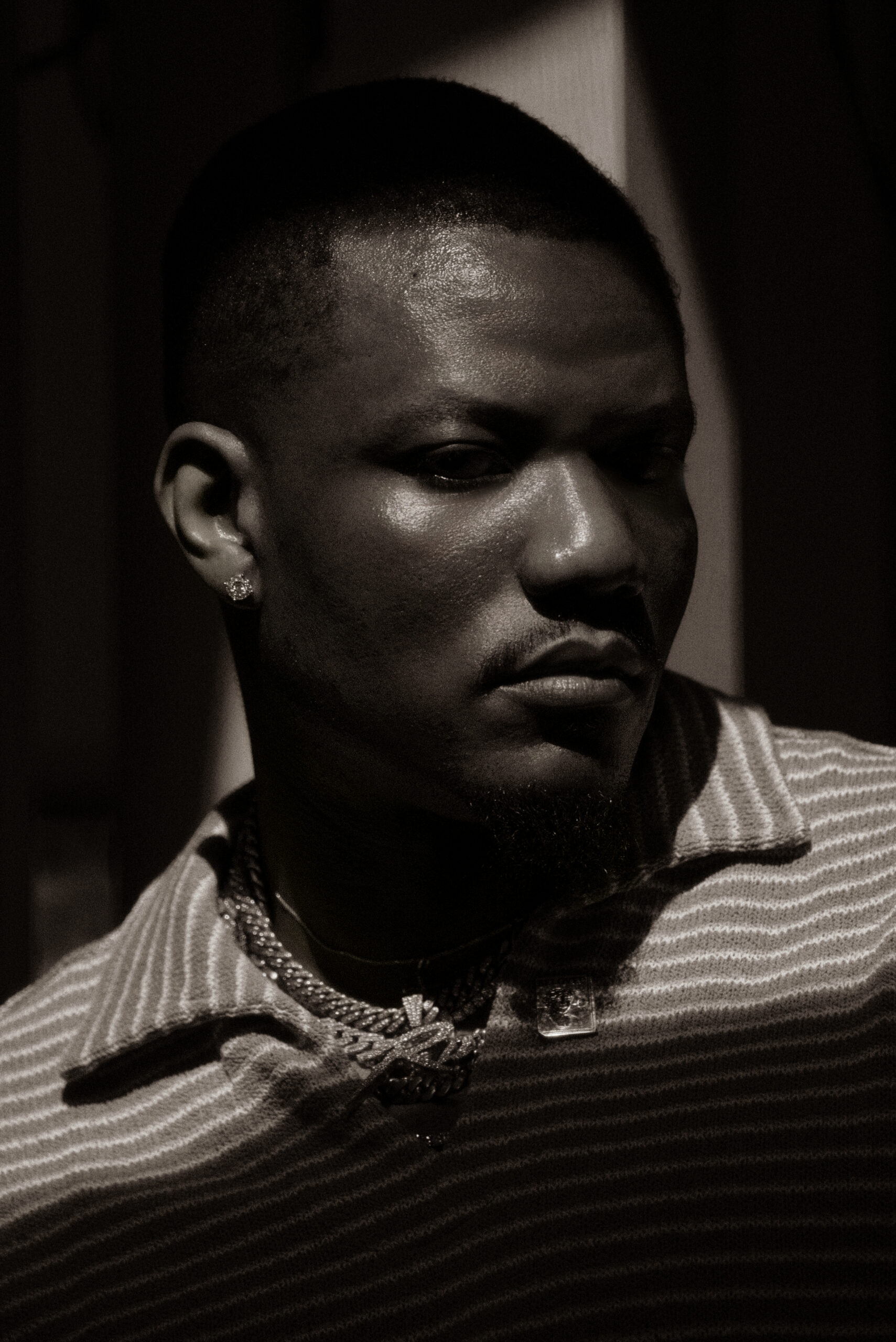
We sat down with him to talk about what that silence was, what it took to come back, and what it means to define a new era on your own terms.
Q: You’ve been one of the most essential producers in Nigerian music for over a decade. Olamide, the YBNL era, the artist transition, “Finesse” going global, the Usher album. By any metric, your career is one to revere. But I was watching your recent vlogs, and you were very honest about going through a depressive phase, about needing a reset to metabolize it. Why a reset, and how does someone carrying that kind of legacy and momentum arrive at that place?
A: At some point, you realize the importance of constant growth and evolution. My career trajectory has always been guided by a desire to explore new possibilities. I always look for what’s next to do rather than being confined to a specific sound or brand identity. Growth has always been the constant for me. The moment something stops serving who I’m becoming, it starts to eat at you, and staying in that space can lead into a depressive state.
Q: A major and defining moment in your career is moving from Pheelz the producer to Pheelz the artist. When did you consider that, “I think I need to move to being the person that’s not mostly behind the scenes”?
A: At heart, I have always considered myself an artist first. I originally learned to produce beats specifically to facilitate my own songwriting. The COVID-19 pandemic was the catalyst that solidified that evolution, it shifted my perspective on life and motivated me to stop prioritizing the fear of being seen or the opinions of others.
Q: I read that you grew up in Afromedia, in the Ojo area of Lagos. What was childhood like, and how did those early experiences shape your relationship with music, eventually leading you to Coded Tunes, where you met Olamide and began what would become an illustrious career?
A: I grew up as a pastor’s child in Lagos, so it was often a case of “oya, go inside.” I spent a lot of my time indoors, which gave me the opportunity to focus on learning music software, as well as the guitar and drums, mostly through the internet and occasional visits to cyber cafés. My professional journey began when I gave a CD of my beats to Maya Hunter*, who introduced me to ID Cabasa at Coded Tunes. That was also where I met Olamide. At the time, the studio needed an intern, and that opportunity led to an internship and eventually became my formal entry into the music industry.
Q: That connection evolved into one of the most significant artist-producer partnerships in Nigerian music, with you playing a major role in Olamide’s rise and the growth of YBNL, a relationship that has spanned over thirteen years. Take me back to the moment everything clicked.
A: We didn’t actually work together until after I completed the internship. But when we eventually reunited at YBNL, within hours of reconnecting we had produced “First of All.” That record became the foundation for everything that followed.
Q: And off the back of that foundation you went on to cement yourself as one of the most essential producers of that era, before stepping into your own lane as an artist and generating massive success with multiple hits. But then you said candidly in a recent vlog, “I had to step back, not from the world, but from myself.” After all of that, why did you feel that way?
A: After the success with “Finesse,” yes, the top chart positions feel good, the numbers are nice, but they should not be the primary motivator for artistic output. I felt overwhelmed by the noise and the demands of the major label system. At that point, there’s a level of silence that’s non-negotiable. The momentum is difficult to sustain without a pause.
Q: Hmm, what do you think the industry can do better to protect and relate to artists when they reach that point?
A: Artists are human beings who need rest. There should be more compassion from both the industry and fans. The pressure to be constantly active is detrimental, silence is also a vital part of the creative process that allows for better inspiration.
Q: And you’ve chosen to be very open about that. What made you decide that this was a conversation worth having publicly?
A: I chose to be open about my personal struggles with depression and anxiety so I can foster a sense of safety for others. Artists mustn’t act like “supermen” all the time. Vulnerability is essential, and if I can face these challenges, I can also help allow others to feel less isolated.
Q: Your lead single, “I’M OK,” is built on these exact feelings. How do you believe it can speak to people, and why Tiwa for this specific record?
A: “I’M OK” is a crucial mantra that was made to help listeners process their emotions. I believe that repeating affirmations through music can help individuals navigate difficult times, and Tiwa Savage came on the song because the message resonated with her own experiences.
Q: And while “I’M OK” serves as the introduction, the project itself feels like a much broader statement. What does A Rii Set represent for you creatively at this stage of your life and career?
A: This is a personal and sonic return to the true source of my love for music. I started creating again without the pressure of chasing trends or hits. My aim was to enjoy the creative process again and establish a new era.
Q: Speaking of trends and hits, you’ve witnessed Afrobeats evolve into a global force. You’ve worked at the highest levels of the industry, from international collaborations with Dr. Dre and Usher to Grammy recognition. In that process, there have been conversations around whether the genre has lost some of its internal cohesion or sense of collective direction as it has globalised. What’s your perspective on that?
A: One thing I’ll say is that there needs to be more advocacy and a collective approach to Afrobeats again. I want to urge artists to educate the world on the spirit of the genre. The Afrobeats community needs to prioritize self-sufficiency and not place excessive importance on international validation. We built an industry that thrived long before any recognition existed.
Q: That idea of self-sufficiency is interesting because you’ve always occupied multiple creative spaces at once, Pheelz the artist and Ridimacoool the producer. Going forward, how do those two identities coexist?
A: I plan to maintain that dual identity, continuing to release music as both an artist and a producer. Having these two distinct outlets allows for greater creative expression and enables me to experiment more freely with different artists and sounds. That freedom matters to me more than a clean singular narrative.
Q: You’ve documented some of your most vulnerable emotions on this EP. What do you hope listeners take away from it when they finally sit with the project?
A: I want the audience to simply listen to the project and trust their own nervous system to judge the work. They need to detach themselves from the smoke and mirrors of the industry and connect with how the music genuinely makes them feel.
Q: Change has been a constant throughout your journey, from the early days at Coded Tunes, to YBNL, to becoming a global hitmaker, and now entering this new chapter with A Rii Set. If you had to define this era of Pheelz in just two words, what would they be?
A: Free and Skoda!